
The problem
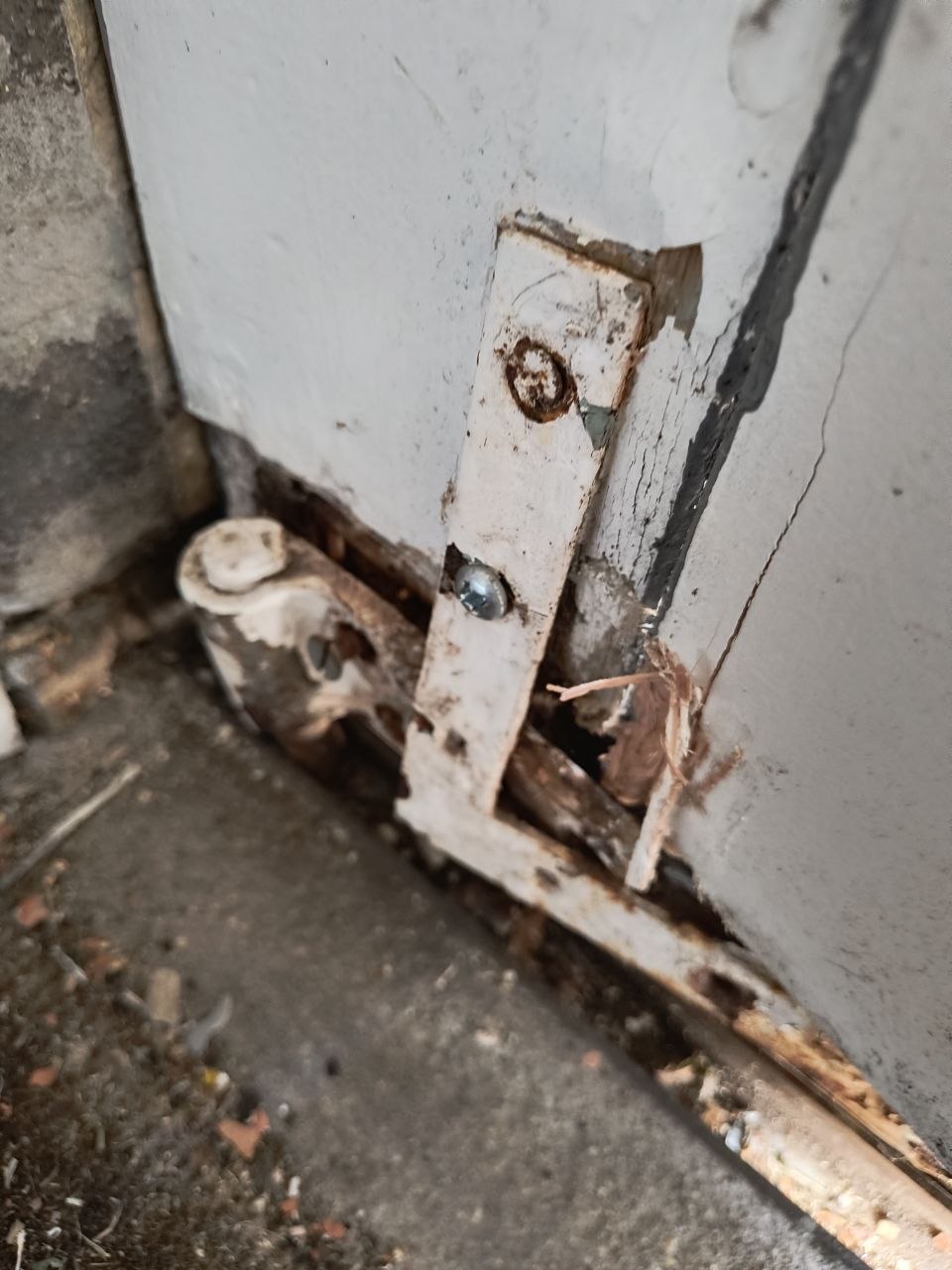
Wooden external doors fail at the bottom rail first, and almost always for the same reason: water sits on the threshold, capillaries up into the end-grain, and over five or ten years it turns sound timber into something you can scoop out with a screwdriver. By the time the paint starts flaking and the hinges feel loose, the rot is already several layers deep.
This door in Deal had reached that stage. The bottom rail was soft right through, with rust trails down from the lower hinge where the screws were no longer biting into anything solid. A windy day was doing real work on the rest of the joint each time it slammed.
The approach
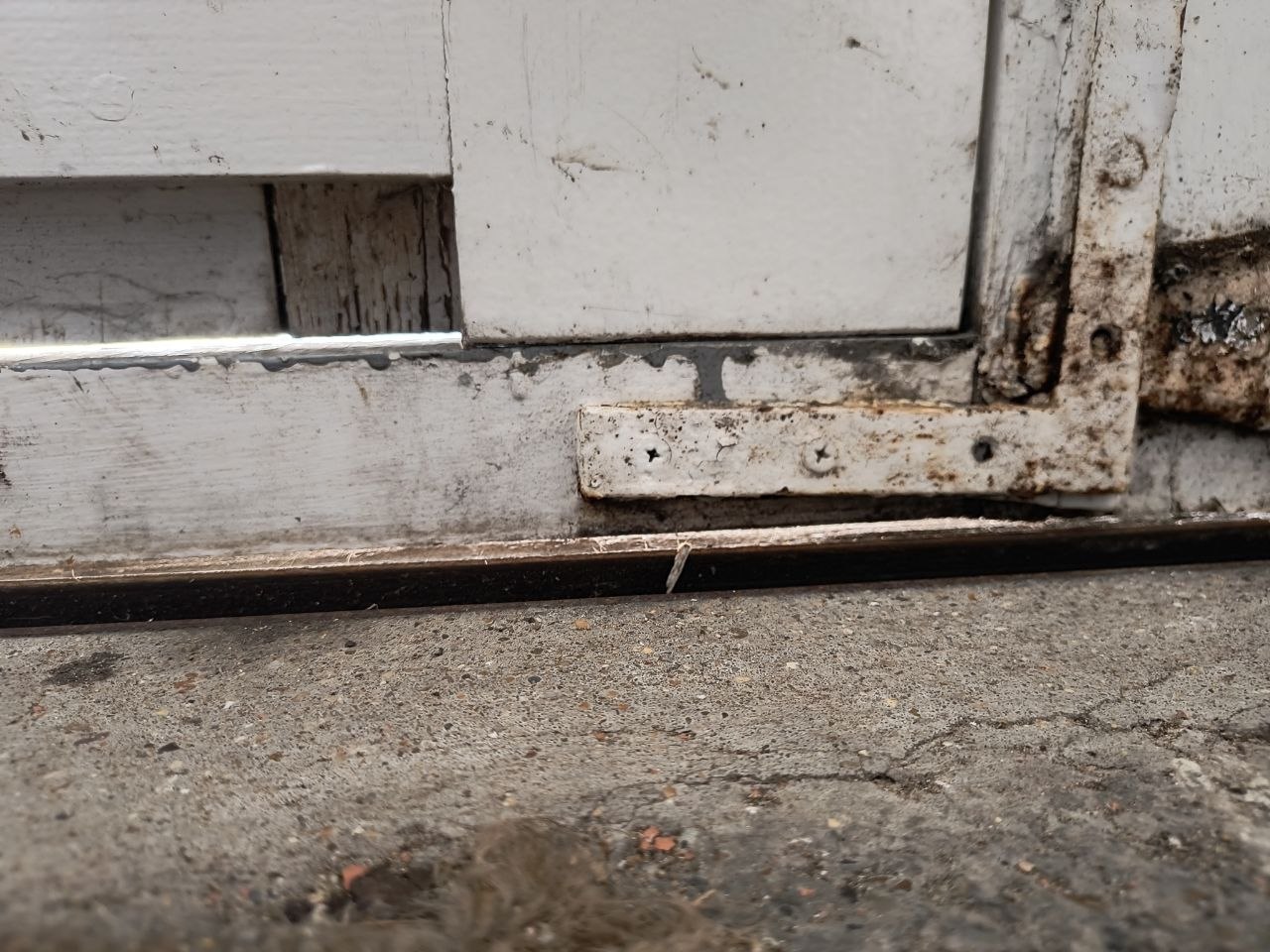
Replacing the whole door is rarely necessary on a job like this. The frame is usually still sound and the upper panels still hold the structure. The right repair is a hardwood splice: cut the rotted timber back to good wood, scarf-joint a piece of fresh hardwood into the gap, glue and pin it, then treat the exposed end-grain with a preservative before any paint goes back on.
Hardwood is the right choice here because it shrugs off the damp far better than the original softwood. The splice will outlast the rest of the door if it is sealed properly. The hinge mortices are then re-cut into the new timber, the hardware is rebedded, and the door is rehung true to the frame.
The outcome
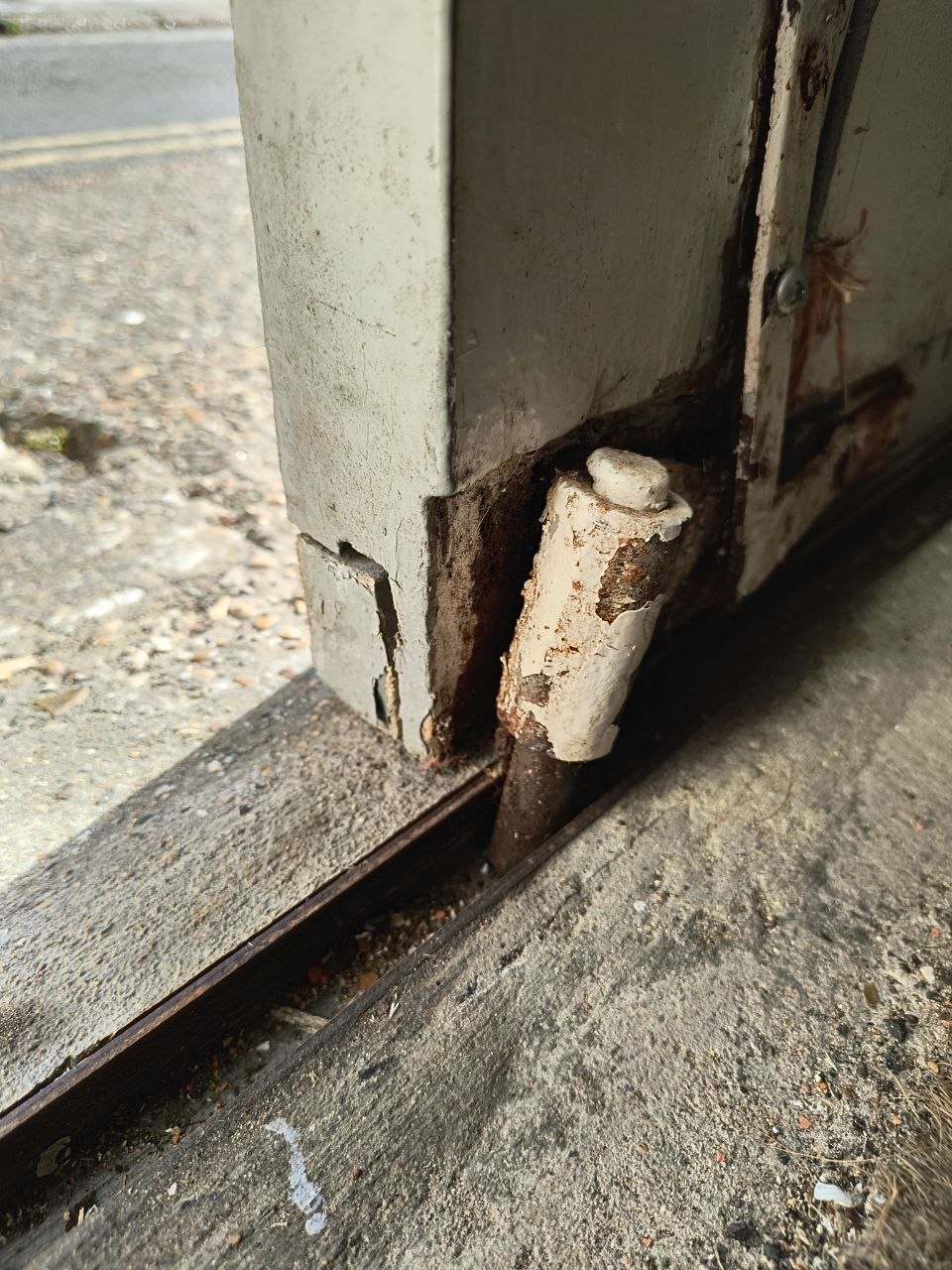
By the end of the day the door closes square against the frame, the hinges are back into solid timber, and the threshold is sealed. A coat of primer goes on the new hardwood, then top-coat once it has cured. With reasonable maintenance, a fresh paint coat every few years, a dab of frame sealant if you see the line begin to crack, a repair like this lasts the lifetime of the door.
If your door is showing the same signs
If your door drags, sticks, or weeps when it rains, get in touch. These jobs are far easier, and a lot cheaper, before the frame itself goes. A rotted door usually starts as flaking paint at the threshold; if you catch it there, a small splice is all it needs. Leave it another two winters and you might be looking at a frame replacement.
Need a door repaired?
The Sandwich Handyman covers door repairs, frame work, and timber maintenance across Sandwich, Deal, and the surrounding East Kent villages.
Contact Richard