
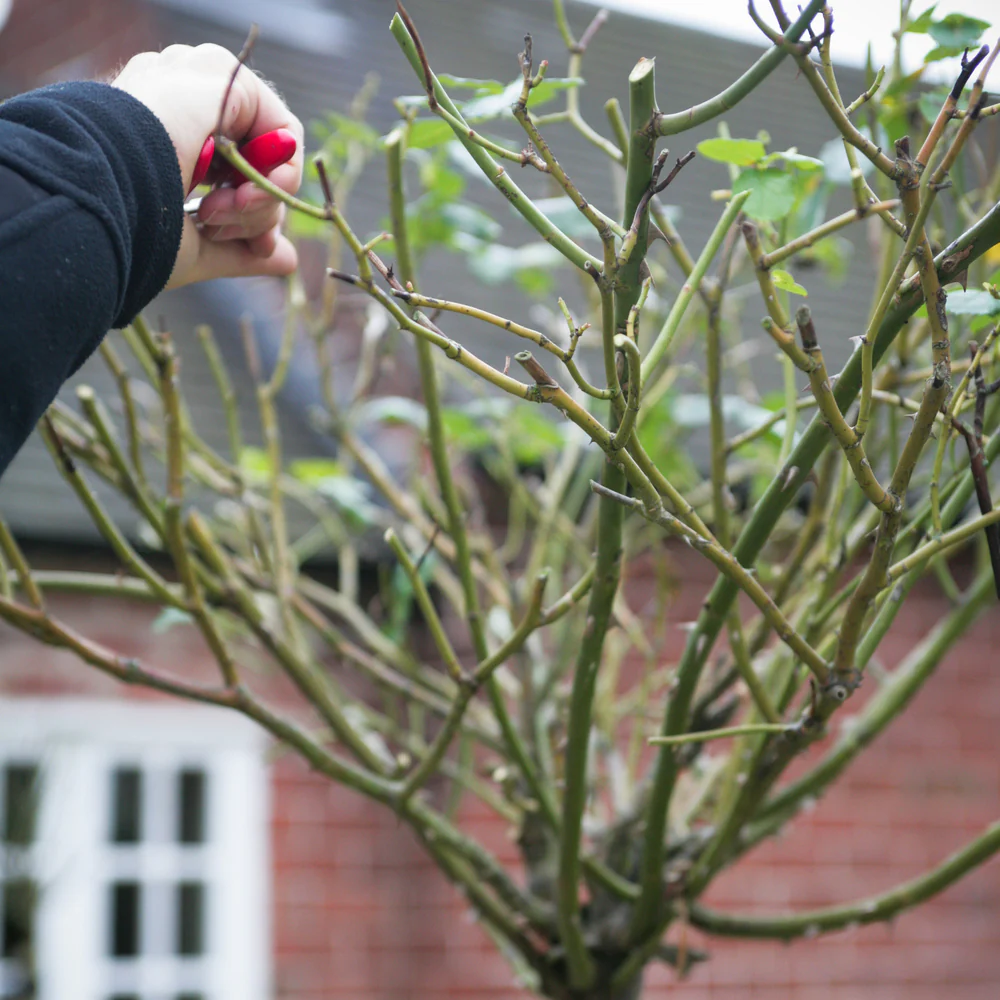
1. Pick the right time
For most bush roses in the UK, main pruning is usually done in late winter to early spring, once the hardest frost risk has eased. In Kent that is often around February to March, depending on weather.
Climbing and rambling roses can have different timing, so check the rose type first if you know it.
2. Use clean, sharp tools
Use sharp secateurs, and loppers for thicker stems. Gloves matter with roses, and eye protection is sensible when working through thorny canes.
Wipe blades clean before you start and between plants if disease is suspected.
3. Remove dead, damaged, and diseased stems first
Cut out dead wood back to healthy green tissue. Remove any broken stems, blackened growth, or rubbing canes that will only cause problems later.
This first pass makes the main shaping much easier to see.
4. Open up the centre of the plant
Keep stronger outward-facing stems and reduce crowded inward growth. A more open shape improves airflow and can reduce disease pressure.
If the middle is very congested, remove a few older canes from the base rather than nibbling all over the plant.
5. Make clean cuts above outward buds
Cut around 5 to 10 mm above an outward-facing bud, with a slight slope away from the bud so water runs off.
Avoid long stubs left above buds, as they can die back and look untidy.
6. Reduce height to a balanced framework
For many bush roses, cutting back to a tidy framework of strong stems helps keep the plant manageable and vigorous. The exact final height depends on the rose type and how hard a prune you want.
If you are unsure, prune more lightly first. You can always reduce a bit more afterwards.
7. Tidy and dispose of prunings
Clear fallen leaves and prunings from around the base to reduce disease carry-over. Do not leave thorny waste where people or pets will brush past it.
If diseased material is present, bag it and dispose of it appropriately rather than composting.
8. Feed and mulch after pruning
After pruning, apply a rose feed and a layer of mulch around the base, keeping it clear of direct contact with stems.
That helps support fresh growth once temperatures rise.
When to ask for help
Call Richard if roses are overgrown, very thorny, mixed with climbers, or hard to access safely. It is also worth getting help where old woody plants need staged renovation over more than one season.
Need rose pruning done for you?
The Sandwich Handyman can help with rose pruning, hedge work, lawn care, and practical garden tidy-ups in Sandwich and nearby East Kent villages.
Contact Richard